Why Products Containing Batteries, Liquids, or Magnets Face International Shipping Restrictions and What Alternatives Are Available
International shipping restrictions are often misunderstood because people assume every product with a battery, liquid, or magnet falls under the same rules. In reality, these items are regulated for different reasons and under different transport standards. A smartphone with a built-in lithium-ion battery, a bottle of perfume, and a magnetic phone mount may all require additional review before shipment, yet the applicable regulations, packaging requirements, documentation, and acceptable transport methods are not the same.
The key question is therefore not whether a product contains one of these components, but whether the shipment complies with the regulations governing the chosen transport mode, the carrier’s acceptance policy, and the import rules of the destination country. Before arranging international delivery, identify the exact characteristics of the product instead of relying on broad assumptions.
The Safety Risks Behind Air Transport Restrictions

Air transport imposes the strictest controls because an incident during flight is significantly harder to manage than one occurring during road or sea transport. The International Air Transport Association (IATA) and aviation authorities therefore classify many battery-powered devices and hazardous substances as dangerous goods when certain conditions are met.
Lithium batteries receive the greatest attention because damaged, defective, or improperly packed cells can experience short circuits, overheating, and thermal runaway, a chain reaction that may generate intense heat and fire. Although many consumer electronics containing lithium batteries can still travel by air, they must satisfy detailed requirements covering battery design, testing, state of charge, packaging, marking, and documentation. Stand-alone lithium-ion batteries are generally subject to stricter conditions than batteries installed in equipment, and many cannot travel as cargo on passenger aircraft.
Liquids create different hazards. The concern is not simply that a bottle could leak. Alcohol-based perfumes, nail polish, paint, solvents, aerosol sprays, and certain cleaning chemicals may be classified as flammable, corrosive, toxic, or pressurized. Changes in air pressure during flight can increase the risk of leakage or container failure if packaging is unsuitable. By contrast, many water-based consumer products may present far fewer transport concerns, provided they meet packaging requirements.
Magnets present another unique challenge. Strong magnetic fields can interfere with aircraft navigation instruments and compasses if the magnetic field measured outside the completed package exceeds permitted limits. A small magnetic closure on a phone case rarely causes problems, but industrial magnets, large loudspeaker assemblies, and certain scientific equipment may require magnetic shielding, field testing, or an alternative transport route before they are accepted for shipment.
These differences explain why batteries, liquids, and magnets should never be treated as one general category of “restricted goods.” Each is evaluated according to its own technical hazards rather than the product label alone.
Product Classification Determines Which Rules Apply
Many shipping delays occur because products are classified too generally instead of according to their actual configuration.
For batteries, the first distinction is whether the battery is shipped by itself, packed with equipment, or installed inside a device, as each situation follows different UN classifications and airline requirements. Battery chemistry also matters. Lithium-ion batteries used in phones and laptops are regulated differently from lithium metal batteries found in products such as watches or emergency equipment. Capacity, measured in Watt-hours or lithium content, further affects transport requirements, and IATA requires lithium batteries to meet UN testing standards before international shipment.
Liquids must also be classified by their properties rather than volume alone. Bottled water, skin care products, alcohol-based perfume, aerosols, and industrial solvents fall into different hazard categories. The Safety Data Sheet (SDS/MSDS) identifies important transport information, including the UN number, hazard class, packing group, and flash point where applicable.
Magnetic products are evaluated according to the magnetic field of the completed package, not simply the strength of an individual magnet. Weak magnets inside consumer electronics are often acceptable, while stronger magnetic assemblies may require testing or shielding before air transport.
Identifying these differences early helps determine the correct shipping method and avoids treating every battery, liquid, or magnetized product as though it were subject to the same international shipping restrictions.
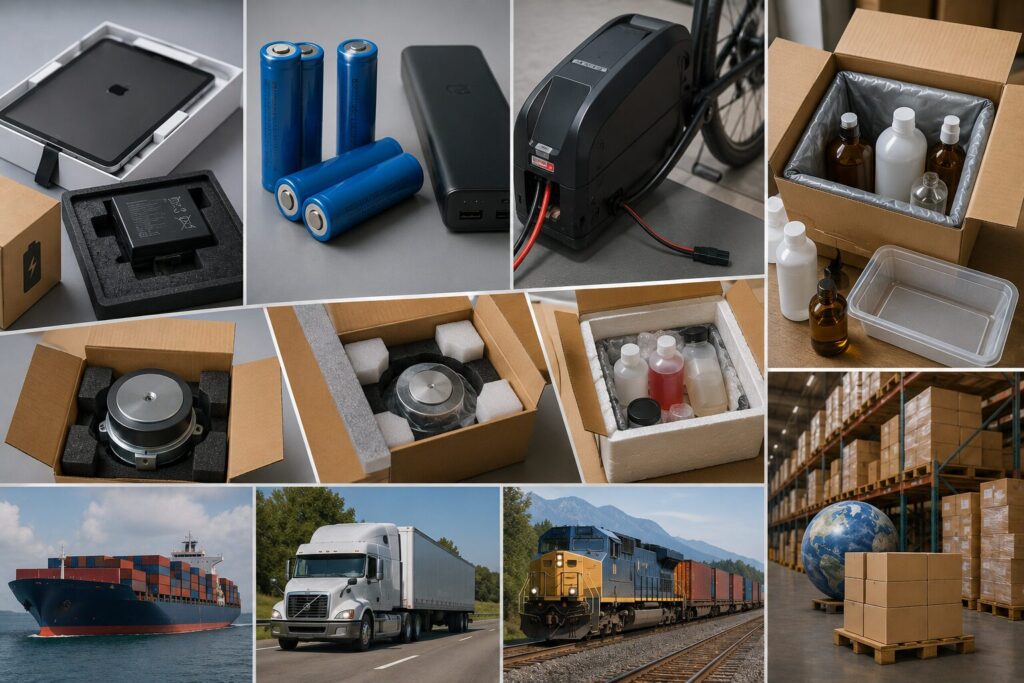
Packaging, Labels, and Supporting Documents Matter as Much as the Product
Even when a product is legally permitted for international transport, improper preparation can still lead to rejection.
Lithium batteries generally require protection against short circuits, accidental activation, impact damage, and movement inside the package. Depending on the shipment, required markings, lithium battery labels, and dangerous goods documentation may also apply. Since 2019, manufacturers and distributors have also been expected to make the UN 38.3 test summary available for lithium battery types to demonstrate successful safety testing before transport.
Liquids frequently require leak-resistant primary containers, absorbent materials where necessary, secure secondary packaging, and rigid outer cartons capable of preventing damage during handling. Hazardous liquids may additionally require hazard labels, UN identification numbers, and documentation based on their classification in the SDS.
Magnetic products may require field testing after packaging to verify compliance with airline limits. When magnetic shielding is used, the effectiveness must be confirmed through measurement rather than assumption.
Another important consideration is that shipping requirements differ depending on the transport service selected. Postal operators, express couriers, freight forwarders, airlines, and ocean carriers often apply different acceptance policies even when they operate under the same international regulations. A package accepted by one courier may be rejected by another because individual operators are permitted to impose more restrictive conditions than the minimum regulatory standard. Both IATA and the FAA recommend verifying the exact carrier requirements before shipping rather than relying solely on general regulations.
Practical Alternatives When Standard Shipping Is Not Available
Removing a restricted component is not always the best solution. In many cases, choosing a shipping method that complies with transport regulations while minimizing cost and delays is more practical.
For battery-powered devices, shipping the product without the battery can be easier than sending a loose lithium battery internationally. Customers can purchase a compatible battery locally. If the battery must be included, transporting it installed inside the device is usually simpler than shipping it separately, provided the equipment is protected against accidental activation and meets all packaging requirements. Damaged, swollen, or recalled lithium batteries should never be sent through standard parcel services.
Liquid products may also have practical alternatives. Replacing alcohol-based or aerosol products with solid perfumes, refill-free items, powders, or cleaning tablets can reduce shipping restrictions because these formats present fewer leakage and flammability concerns. However, every replacement product should still be evaluated under the applicable transport regulations.
For products containing strong magnets, redesigning the package may be more effective than searching for a different courier. Magnetic shielding, adjusting the magnet’s position, or reducing the external magnetic field can help satisfy airline requirements. If air transport remains unavailable, an experienced dangerous goods forwarder or sea and road freight may provide a more suitable option.
Surface transport is another alternative for shipments that cannot travel on passenger aircraft. Although sea and land transport still follow dangerous goods regulations, they often accept products that face stricter air cargo limitations. Businesses shipping internationally on a regular basis may also benefit from regional fulfillment centers, allowing bulk shipments to enter a country before domestic distribution.
International shipping restrictions are intended to manage transport risks rather than prohibit these products entirely. By identifying the product correctly, meeting packaging and documentation requirements, and confirming the carrier’s acceptance policy, shippers can often find a compliant solution instead of assuming the item cannot be shipped.